CPS is a Cartel: A State Senator’s Murder-Suicide While Whistleblowing on Child Protective Services
An Investigative Look at Nancy Schaefer, the Business of Child Protective Services, and a Death That Still Raises Questions
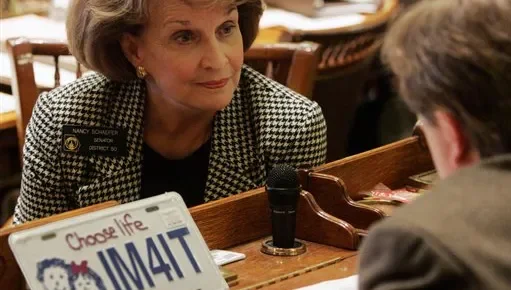
Nancy Shaefer in the State Senate
On the morning of March 26, 2010, a daughter drove to her parents' home in Turnerville, a small mountain community in north Georgia's Habersham County, and found them both dead. Former Georgia State Senator Nancy Schaefer, 73, lay in the bedroom with a single gunshot wound to her back. Her husband of 52 years, Bruce Schaefer, 74, lay nearby with a single gunshot wound to his chest. A handgun was found near Bruce's body, along with several letters written to family members and what authorities described as a suicide note.
By the following morning, the Georgia Bureau of Investigation had issued a press release. The conclusion was swift and unequivocal: Bruce had shot his wife, then turned the gun on himself. Murder-suicide. Case closed.
Except that almost nothing about it felt closed to the people who knew them.
Nancy Schaefer was not merely a politician who had fallen on hard times. She was, at the time of her death, the most prominent sitting or former elected official in the United States who had publicly and systematically documented what she called "the corrupt business of Child Protective Services." She had spent four years investigating CPS agencies across Georgia and the country, interviewing hundreds of families, and building a case — sourced in federal law, state data, and firsthand testimony — that America's child welfare system had been quietly transformed by financial incentives into something that profited from the removal of children from their homes. She had named the mechanism, identified the legislation that created it, and was on the verge of publishing a book and a documentary that would take her findings to a national audience.
She died the night before she was scheduled to travel to Washington, D.C.
This article does not claim to know what happened in that bedroom in Habersham County. The official ruling has never been formally reversed, and no alternative suspect has ever been charged. But this article does argue that what Nancy Schaefer discovered about the American child welfare system was real, is real, and remains dangerously underexamined — and that the questions surrounding her death deserve to be held in the same frame as the substance of her work, not treated as separate phenomena.
The Woman Who Wouldn't Look Away
Nancy Smith Schaefer was born in Clayton, Georgia, in 1936 — the same mountain country where she would eventually die. She studied at the University of Georgia and the Atlanta College of Art before earning her bachelor's degree from Wesleyan College. For decades she was active in conservative and Christian causes in Georgia, founding a nonprofit called Family Concerns in 1985 and running for mayor of Atlanta in 1993, for lieutenant governor in 1994, and for governor in 1998 before finally winning election to the Georgia State Senate from the 50th District in 2004.
She was, by all accounts, a tireless woman — someone who took constituent calls personally, who drove the back roads of north Georgia's mountains to meet with voters, and who took the word "advocate" literally. She sat on the Senate's Children and Youth Committee, and it was there, through the accumulation of individual stories from families across her district, that she first began to understand the scope of what was happening inside Georgia's Department of Family and Children Services (DFCS) — the state's equivalent of CPS.
The case that began her investigation was, on its surface, a single family's tragedy. A grandmother in a neighboring state called Schaefer to report that her two granddaughters had been taken from her daughter, who lived in Schaefer's district. The daughter, young and frightened, had been told — wrongly — that signing away her parental rights was the only way she would ever see her children again. She signed. Her children were placed with foster parents who, it later emerged, had eighteen foster children at any given time and whose household had a documented inappropriate relationship between the foster mother and a caseworker. The grandmother fought for years to get her grandchildren back. A judge initially agreed. Then, without explanation, a new court order sent the children to their father on the West Coast — a man who had previously expressed no interest in the case.
Schaefer had expected this to be an aberration. She soon learned it was not.
"I have since discovered," she wrote in her 2007 report, "that parents are often threatened into cooperation of permanent separation of their children."
Over the following four years, she heard from hundreds of families. She crossed state lines to investigate similar cases. She corresponded with parents, grandparents, and former foster children. She consulted legal experts and studied federal funding structures. And what she found, she later said in a recorded interview at the University of Georgia's Russell Library, left her stunned — not just by the individual injustices, but by the structural logic that made those injustices not accidents but outcomes.
The Report — and What It Said
In November 2007, Schaefer published a document titled "The Corrupt Business of Child Protective Services." It circulated first through advocacy networks, then through churches and homeschool communities, then across early internet forums, then everywhere. Fourteen years after her death, it remains one of the most-cited documents in the parental rights movement.
The report's central argument was not that individual caseworkers were monsters. It was that the system had been designed — through specific, traceable federal legislation — to create a financial incentive for child removal that overrode the professional judgment of caseworkers and distorted the operation of family courts.
The key legislation Schaefer identified was the Adoption and Safe Families Act (ASFA), signed by President Bill Clinton in November 1997. ASFA was, on its face, a bipartisan attempt to fix a real problem: children languishing in foster care for years, bounced between placements, aging out of the system without permanent homes. The law's stated goal was to accelerate permanency — to get children out of the limbo of foster care and into stable family situations, either through reunification or adoption.
To do this, Congress built in a financial incentive. States would receive cash bonuses — initially $4,000 for every child adopted out of foster care above their baseline number, and $6,000 for every child classified as having "special needs." This was confirmed by the federal Administration for Children and Families in its own guidance documents, and reauthorized multiple times in subsequent legislation.
Schaefer's argument was that these bonuses, combined with federal Title IV-E funding that continued as long as a child remained in foster care, had created a perverse economic logic inside state child welfare agencies. The more children agencies removed, the more children were available for adoption, and the more adoption bonuses states collected. The funding stream rewarded removal, not reunification. The incentive for social workers to return children to their families quickly had, in her words, "disappeared."
She went further. In her April 2008 interview at the University of Georgia, she described something she said had left her speechless: some county-level CPS departments in Georgia had established quotas — a required number of children to be placed in order to meet their budget targets.
"I just was stunned to find out that we even had some departments in some of our counties that had quotas — that they needed X number of children to meet the budget," she said, "and this just can't be."
The report also documented what she described as the systematic bypassing of due process. Family court proceedings, she noted, were conducted in secret — no jury, no open courtroom, no press access. Parents were frequently denied the opportunity to speak. Evidence was not subjected to adversarial challenge in any meaningful sense. And the standard of proof required to remove a child was far lower than that required in criminal proceedings, even though the consequences — permanent termination of parental rights — could be more devastating than a prison sentence.
She called for an independent federal audit of all state CPS agencies, the elimination of the financial incentives she had identified, mandatory jury trials before permanent removal, open family courts, and warrants before entry onto private property.
She also noted something that should disturb anyone: children in foster care were, statistically, far more vulnerable to abuse than children in their homes of origin. Citing a 1998 report from the National Center on Child Abuse and Neglect, she wrote that six times as many children died in foster care than in the general public — and that children in foster care were "far more likely to suffer abuse, including sexual molestation than in the general population."
The system built to protect children was, by her account, placing them in greater danger.
The Incentive Machine — What the Data Shows
It would be easy to dismiss Schaefer's findings as the product of one politician's outrage — powerful but anecdotal, emotionally persuasive but empirically thin. The problem is that the underlying financial structure she described is not in dispute. It is documented in federal law, in HHS guidance documents, and in the academic literature.
The ASFA adoption incentive program is real. The Administration for Children and Families publishes annual records of adoption incentive earnings by state going back to fiscal year 1998. States have collectively received tens of millions of dollars in these bonuses. The bonus structure was $4,000 per adoption above baseline — the exact figure Schaefer cited — and higher for special needs children.
The question that has generated genuine scholarly debate is not whether the incentives exist, but what behavior they produce. A 2018 analysis published in the Memphis Law Review by Texas Tech University law professor DeLeith Gossett concluded that ASFA's financial incentives "have disrupted families permanently by the speedy termination of parental rights, without the accompanying move from foster care to adoptive homes." She added that "the programs that the Adoption and Safe Families Act govern thwart its very purpose as children continue to languish in foster care waiting for permanent adoptive homes, often until they age out of the system into negative life outcomes."
This is not a fringe view. The Urban Institute, examining ASFA twelve years after its implementation, found that it increased the number of children leaving foster care but failed to adequately support blood relatives — a central concern Schaefer had raised, noting that kinship placements were routinely overlooked in favor of non-related adoptive placements that generated higher federal bonuses.
The racial dimension is impossible to ignore. Advocates working to repeal ASFA note that Black children are 2.4 times more likely to have their parents' rights terminated than white children. American Indian children in some states are removed at rates eighteen times that of white children relative to population. A 2024 Harvard Law Review analysis of a class-action suit against New York City's Administration for Children's Services described an internal audit, obtained only through Freedom of Information requests, that concluded ACS was "a predatory system that specifically targets Black and Brown parents and applies a different level of scrutiny to them throughout their engagement with ACS." ACS staff reported feeling pressure "to be more punitive toward Black parents" than white ones and described removing children based on fear of institutional retribution rather than concerns about actual safety.
The pattern Schaefer identified — poor families, families of color, families without resources to fight back — is precisely the pattern that emerges in the data, decade after decade.
The Cato Institute, not typically aligned with progressive advocacy, published a detailed analysis in 2018 under the title "When the Child Protective Services System Gets Child Removal Wrong," written by family law attorney Diane Redleaf. Redleaf documented that CPS caseworkers in 2016 alone placed 273,539 children into foster care — and that a separate, largely invisible category of "coerced voluntary separations," conducted without court orders in as many as 37 states, swelled that number further. She described a system that had "improvised clever tactics to avoid ever presenting a legal case to a judge" — a structural observation that maps directly onto Schaefer's 2007 warnings about secret proceedings and the absence of adversarial due process.
Recent reporting from Texas Monthly documented that in Texas in 2022, only a third of CPS investigations involved allegations of physical or sexual abuse. The majority — categorized as "neglect" — often amounted, in practice, to what poverty looks like. After Texas tightened its removal standards in 2021, requiring judges to find a child in "imminent danger" rather than at "substantial risk of harm" before removal for neglect, the number of children removed from their homes dropped from over 16,500 in 2020 to approximately 9,600 in 2022. The children of Texas did not become dramatically safer between those years. What changed was the standard of evidence required before the state could separate a family.
The Death — and the Questions That Won't Die
Nancy Schaefer was, by the time of her death, a former senator. She had lost her seat in the 2008 Republican primary — a loss she publicly attributed to her CPS work. She had no remaining legislative power. But she had something potentially more dangerous: a national platform she was about to use.
In the final weeks of her life, she was completing a book and a documentary video on CPS, produced with filmmaker William Finlay. She had told friends she was planning a trip to Washington, D.C., and according to one account, she had expressed concern for her own safety — asking her husband Bruce to accompany her for protection.
She and Bruce were found dead hours later.
The official account, issued by the GBI, is that Bruce shot Nancy once in the back while she slept, then shot himself. A gun was found near his body. Several letters were found, including what authorities described as a suicide note, which the sheriff said contained "vague mentions of financial problems." Sheriff Joey Terrell acknowledged the vagueness himself, stating publicly: "The evidence might be in the letters. It might not. We might not ever know."
The family confirmed the Schaefers had experienced some financial difficulties — investment losses and a foreclosure notice on a property they had reportedly already decided to sell. But family members and friends disputed that these troubles were severe enough to explain what happened. Bruce and Nancy's assets, according to those close to them, still exceeded their secured debts by several hundred thousand dollars.
The questions raised by friends and civic activists in the days after the deaths have never been formally answered:
Bruce Schaefer was, by unanimous account, deeply devoted to Nancy and her work. He had supported her CPS investigations for years. Why would he kill her on the verge of the most significant moment in that work? Why would a man who showed no signs of unusual stress on the last Tuesday of his life — when he stopped by a friend's furniture store and seemed, in the friend's words, "like his old self" — decide days later to commit an act of extreme, irreversible violence? Why would a devout Christian man, whose faith was central to his identity and that of his wife, commit what his faith regards as a mortal sin? Why, if financial stress was the motive, did he not reach out to any of his five adult children, who loved him and who would certainly have helped?
Garland Favorito, founder of VoterGA, a Georgia elections integrity organization, circulated a formal written analysis in the days after the deaths arguing that the available facts made it "more obvious" that the case was "a murder made to look like suicide." Favorito cited the accelerating death threats the Schaefers had been receiving, Bruce's apparent psychological normalcy in the days before the event, and Nancy's proximity to the completion of her most important work.
No evidence publicly available to date definitively proves murder. The GBI found no physical evidence inconsistent with the murder-suicide ruling. No alternative suspect was ever identified. And it is, of course, true that personal crises — financial stress, depression, fear of the future — can strike families that appear, from the outside, to be stable and functional.
But several things remain true simultaneously: a motive was never established; the official investigation never resolved the fundamental questions raised by people who knew Bruce Schaefer well; and the woman who died was, at that precise moment, the person best positioned to bring a documented, evidence-based case about systemic government corruption to a national audience.
History does not require conspiracy to produce convenient outcomes. Sometimes the effect of an event — the silencing of a voice, the shelving of a book, the cancellation of a documentary — is simply the effect, regardless of cause. But it is not paranoid to note that effect. It is the beginning of responsible inquiry.
What Happened to the Book, the Film, and the Movement
After the deaths, the documentary film that Nancy Schaefer and William Finlay had been producing was effectively abandoned. The book she had been completing was never published. Her 2007 report, already circulating widely, remained the primary artifact of her work — hosted by parental rights organizations, family advocacy groups, and the University of Georgia library system.
The movement she had helped catalyze did not die with her. Parental rights organizations continued to cite her report. Advocacy networks fighting CPS overreach proliferated. In Georgia, in Texas, in Minnesota, families who had lost children to what they described as unjust removals found community and language in Schaefer's words.
But the national legislative moment she might have created — a congressional hearing, a federal audit, a serious challenge to the ASFA incentive structure — never came. The report circulated. The questions remained. The system continued.
Why It Still Matters
It is tempting to treat Nancy Schaefer's story as a historical curiosity — an interesting footnote in the history of American child welfare advocacy. That temptation should be resisted.
In fiscal year 2023, the federal government's own CPS statistics show that approximately 4 million referrals are received annually, with roughly 2 million screened in for investigation. Of investigated cases, around 530,000 children are formally identified as victims of abuse or neglect. Approximately 20% of those children — roughly 105,000 — are removed from their homes and placed into foster care. Additionally, an estimated 40,000 children classified as non-victims are also removed each year.
The federal Adoption Incentive Awards program has been reauthorized not once but multiple times since 1997 — in 2003, in 2008, in 2014, and again as part of the Family First Prevention Services Act of 2018. The basic architecture Schaefer identified remains intact: states receive financial rewards for exceeding their adoption baselines. The amounts and calculations have changed. The underlying incentive has not.
A landmark class-action lawsuit filed in New York City in February 2024 challenged ACS's practice of conducting warrantless home searches — a recent analysis finding that CPS agencies nationally inspect the homes of roughly 3.5 million children annually without a warrant, with only about 5% of those children ultimately found to have been physically or sexually abused. In September 2023, ACS settled one such suit for racial discrimination in removal practices. The Harvard Law Review analysis of these suits notes that a growing body of research documents lasting physical, mental, and behavioral harm to children who are removed from their parents — harm that persists long after reunification or aging out of the system.
Texas's experience, documented in Texas Monthly, shows that reform is possible. After the state raised its evidentiary standard for removal, child removals fell by roughly 40% in two years — without any evidence that children became less safe. The children who were not removed from their homes were, according to the legislative logic of the reform, simply children whose families had been investigated and found not to present an imminent danger. They had been, in the language Schaefer used in 2007, taken "for no good reason."
The racial disparities Schaefer gestured at in her report have been documented with increasing precision in the years since her death. The disproportionate impact of the child welfare system on Black, Indigenous, and low-income families is no longer a matter of advocacy framing; it is in peer-reviewed literature, federal oversight reports, and the internal audits of the agencies themselves.
The secrecy of family courts that Schaefer condemned continues to shield proceedings from public scrutiny in most states. Parents still frequently lack legal representation at the earliest stages of CPS investigations. The "safety plans" that Cato Institute attorney Diane Redleaf described — informal agreements signed under duress that separate children from parents without judicial oversight — remain in use in dozens of states.
None of this is to say that CPS serves no purpose or that every removal is unjust. Children do suffer abuse and neglect. Some parents are genuinely dangerous. The system exists because the alternative — no structured response to child maltreatment — is worse. But the system as it operates, shaped by financial incentives that reward removal, conducted in secret courts with limited due process, disproportionately targeting the poor and the marginalized, is not the same thing as a system that reliably protects children.
That distinction is what Nancy Schaefer devoted the last decade of her life to making. It cost her politically — she lost her Senate seat, she said, because of the report. Whether it cost her more than that, we cannot say with certainty. But we can say that the questions she raised were not settled by her death. They were, if anything, deferred.
Epilogue: The Legacy of an Uncomfortable Truth
Nancy Schaefer was a complicated figure. She was a conservative Christian activist who opposed abortion, same-sex marriage, and separation of church and state in ways that many Americans find objectionable. Her critics in Georgia regarded her as a culture warrior, and some of her CPS research drew on sources and communities that mixed legitimate advocacy with conspiratorial thinking.
But the core of what she documented — the incentive structure created by ASFA, the financial bonuses paid to states for adoption, the secrecy of family courts, the disproportionate targeting of poor families, the inadequate due process protections for parents — has been confirmed by mainstream legal scholars, federal oversight bodies, investigative journalists, and the agencies' own internal documents.
The truth of a claim does not depend on the perfection of the person making it. Schaefer was imperfect. The research she produced was, in parts, flawed and emotionally driven. But its central argument has aged better than the system it criticized.
That system is still running. The incentives are still in place. The courts are still closed. The families — poor, Black, Indigenous, immigrant, disabled — are still losing children to a machine that was built to protect them and is sometimes used to extract revenue from them instead.
If Nancy Schaefer was right — and the evidence suggests she was, substantially — then the country owes it to the families she was fighting for to take that seriously. Not as a conspiracy theory. Not as a partisan cause. But as a policy failure of the first order, one that is destroying families, traumatizing children, and running on your tax dollars.
She tried to say so. She lost her seat for it. And then she died.
The silence that followed has lasted fifteen years. It does not have to last fifteen more.
Sources for this article include Senator Schaefer's 2007 report "The Corrupt Business of Child Protective Services" (hosted by parentalrights.org); her April 2008 oral history interview at the University of Georgia Russell Library; official GBI press releases regarding the Habersham County deaths; ABC News and Georgia Public Broadcasting reporting from March 2010; the Baptist News Global and Baptist Press accounts of her death; the Wikipedia entry on the Adoption and Safe Families Act; the Harvard Law Review analysis "Civil Suits by Parents Against Family Policing Agencies" (2024); the Texas Monthly investigation into Texas CPS reform (2023); the Cato Unbound analysis by Diane Redleaf (2018); the Memphis Law Review analysis of ASFA by DeLeith Gossett (2018); the Think Tank for Inclusion and Equity fact sheet on ASFA; ACF federal guidance documents on adoption incentive payments; and Children's Rights 2023 fact sheet on the child welfare system.